Showing posts with label Holy Trinity. Show all posts

2024/12/11

The Sign of the Cross: Meaning, History, and How Catholics Pray It with Faith


A Catholic woman reverently making the Sign of the Cross before a crucifix while praying, illustrating faith in the Holy Trinity and Christ's saving sacrifice.
The Sign of the Cross is a simple yet powerful Catholic prayer that professes faith in the Holy Trinity and reminds us of Jesus Christ's saving sacrifice on the Cross.


The Sign of the Cross: Meaning, History, and How Catholics Pray It with Faith

By Catholic Prayers & Inspirations

The Sign of the Cross is one of the oldest and most recognizable prayers in Christianity. Catholics begin and end their prayers with this simple yet profound gesture, invoking the Holy Trinity and recalling the saving sacrifice of Jesus Christ.

Though it takes only a few seconds to make, the Sign of the Cross is a powerful profession of faith. It reminds us that we belong to God, that Christ redeemed us through His Cross, and that we are called to live under the guidance of the Father, the Son, and the Holy Spirit.


The Sign of the Cross Prayer

In the name of the Father, and of the Son, and of the Holy Spirit. Amen.


Illustration showing the proper hand and finger position for making the Sign of the Cross according to Catholic tradition, touching the forehead, chest, left shoulder, and right shoulder while praying, "In the name of the Father, and of the Son, and of the Holy Spirit. Amen."

What Does the Sign of the Cross Mean?

Every word and movement of the Sign of the Cross has deep spiritual significance.

"In the name..."

Notice that we say "name" (singular), not "names." This proclaims that there is one God in three Divine Persons:

  • The Father
  • The Son
  • The Holy Spirit

This is our belief in the Holy Trinity, one of the central mysteries of the Catholic faith.


Touching the Forehead

When we touch our forehead, we ask God to bless our minds.

It reminds us to:

  • Think holy thoughts.
  • Seek God's wisdom.
  • Keep our minds focused on Christ.

As St. Paul writes:

"Set your minds on things that are above, not on things that are on earth." (Colossians 3:2)


Touching the Chest

Touching the chest reminds us that Jesus came from heaven to dwell among us.

It also symbolizes our hearts.

We ask God to:

  • Fill us with His love.
  • Purify our intentions.
  • Help us love Him above all things.

Touching the Left Shoulder, Then the Right

This movement represents the Cross upon which Jesus died for our salvation.

Some spiritual writers also explain that it symbolizes Christ leading us from the darkness of sin into the light of His grace.

Whenever we make the Sign of the Cross, we remember:

  • Jesus died for us.
  • He conquered sin and death.
  • We belong to Him.

Why Do Catholics Make the Sign of the Cross?

Catholics make the Sign of the Cross:

  • Before and after prayer.
  • Before reading Sacred Scripture.
  • Entering and leaving church.
  • Before meals.
  • During the Holy Mass.
  • At the beginning of the Rosary.
  • During blessings.
  • In moments of temptation.
  • Before important decisions.
  • Before sleep and upon waking.

It reminds us that every part of our lives belongs to God.


A Powerful Spiritual Weapon

Many saints have spoken about the power of the Sign of the Cross.

It is not a magical gesture. Rather, it is an act of faith that calls upon the power of Jesus Christ.

The saints teach that the devil fears sincere faith expressed through the Cross because it reminds him of Christ's victory over sin and death.

Making the Sign of the Cross reverently can help us:

  • Resist temptation.
  • Strengthen our faith.
  • Remember God's presence.
  • Receive His blessings.
  • Renew our baptismal promises.

The History of the Sign of the Cross

Christians have made the Sign of the Cross since the earliest centuries of the Church.

Around the year A.D. 200, the early Christian writer Tertullian wrote that Christians traced the sign of the cross over themselves throughout the day:

"At every step and movement... we mark our foreheads with the sign of the cross."

Originally, Christians often made a small cross on their foreheads.

Over time, the fuller gesture—touching the forehead, chest, and shoulders—became the common practice throughout the Church.

For nearly two thousand years, this sacred gesture has united Christians around the world.


The Biblical Foundation

Although the Bible does not explicitly describe the Sign of the Cross as it is practiced today, Scripture reveals its essential truths.

We are baptized in the name of the Trinity.

"Go therefore and make disciples of all nations, baptizing them in the name of the Father and of the Son and of the Holy Spirit."
— Matthew 28:19

We glory in the Cross of Christ.

"Far be it from me to glory except in the cross of our Lord Jesus Christ."
— Galatians 6:14

We are sealed by God.

"Do not grieve the Holy Spirit of God, with which you were sealed."
— Ephesians 4:30

These passages reveal why Christians invoke the Trinity and honor Christ's saving Cross.


How to Make the Sign of the Cross Properly

Make the gesture slowly and prayerfully.

  1. Illustration showing the proper hand and finger position for making the Sign of the Cross according to Catholic tradition, touching the forehead, chest, left shoulder, and right shoulder while praying, "In the name of the Father, and of the Son, and of the Holy Spirit. Amen."
    The proper hand and finger position for making the Sign of the Cross reverently, professing faith in the Holy Trinity and Christ's saving sacrifice.

    Touch your forehead.
  2. Touch your chest.
  3. Touch your left shoulder.
  4. Touch your right shoulder.
  5. Say:

In the name of the Father, and of the Son, and of the Holy Spirit. Amen.

Avoid rushing through the prayer. Let every word remind you of God's love.


Common Mistakes to Avoid

  • Making the gesture too quickly.
  • Treating it as a habit without thinking.
  • Forgetting that it is a prayer.
  • Omitting the words.
  • Making exaggerated or careless movements.

The Sign of the Cross deserves reverence because it proclaims our faith.


What the Catechism Teaches

The Catechism of the Catholic Church (CCC 2157) teaches:

"The Christian begins his day, his prayers, and his activities with the Sign of the Cross: 'In the name of the Father and of the Son and of the Holy Spirit. Amen.'"

The Catechism reminds us that this prayer consecrates our lives to God and calls upon His grace in all that we do.


Frequently Asked Questions

Is the Sign of the Cross only for Catholics?

While it is most commonly associated with Catholics, many Orthodox Christians, Anglicans, and some Protestants also make the Sign of the Cross as an expression of faith.

Can I make the Sign of the Cross silently?

Yes. Even when praying silently, you may make the Sign of the Cross as a reverent gesture of prayer.

Should children learn it?

Absolutely. It is often one of the first prayers Catholic children are taught because it summarizes the core beliefs of the Christian faith.


A Daily Reminder of God's Love

Every time we make the Sign of the Cross, we proclaim the mystery of the Holy Trinity, remember Christ's sacrifice, and entrust ourselves to God's loving care.

This simple prayer has strengthened Christians for centuries. Whether at Mass, before meals, at the beginning of the day, or in moments of fear, the Sign of the Cross reminds us that we are never alone.

May we always make it slowly, reverently, and with hearts full of faith.

In the name of the Father, and of the Son, and of the Holy Spirit. Amen.


  If this article helped you grow in your faith, please share it with your family and friends. Explore more Catholic prayers and teachings here on Catholic Prayers & Inspirations.


Related Catholic Prayers

You may also enjoy reading:

2020/06/07

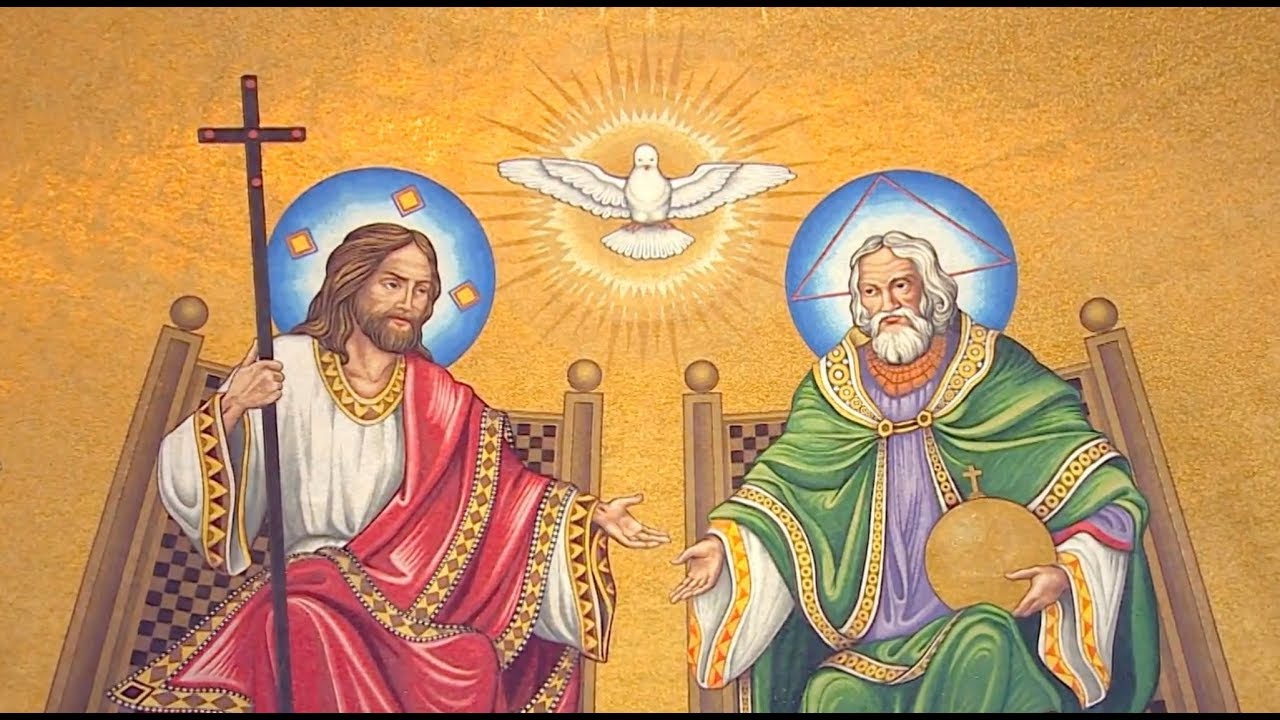
The Holy Trinity

33 Best Holy Trinity Art images | Holy trinity, Trinity, Christian ...


What is the meaning of Holy Trinity?

Holy Trinity Invocation.
 Unto God Only be Honour and Glory. Bless the Father, and the Son and the Holy Spirit, let us praise Him, let us exalt him to the ages of ages.

Christians believe in one God and they believe that Jesus Christ was his son who died in order to bring humans salvation from sin. A key belief of all Christians is the belief in the Trinity – Father, Son and Holy Spirit, who were all present at the Creation of the world and who all take on different roles.
The Christian doctrine of the Trinity (Latin: Trinitas, lit. 'triad', from Latin: trinus "threefold") holds that God is one God, but three coeternal consubstantial persons or hypostases—the Father, the Son (Jesus Christ), and the Holy Spirit—as "one God in three Divine person.
Reflection by early Christians on passages such as the Great Commission: "Go therefore and make disciples of all nations, baptizing them in the name of the Father and of the Son and of the Holy Spirit" and Paul the Apostle's blessing: "The grace of the Lord Jesus Christ and the love of God and the fellowship of the Holy Spirit be with you all", while at the same time the Jewish Shema Yisrael: "Hear, O Israel: The Lord is our God, the Lord alone" has led theologians across history in attempting to articulate the relationship between the Father, Son, and Holy Spirit. Eventually, the diverse references to God, Jesus, and the Spirit found in the New Testament were brought together to form the doctrine of the Trinity—one God subsisting in three persons and one substance. The doctrine of the Trinity was used to oppose alternative views of how the three are related and to defend the church against charges of worshiping two or three gods.
in 1 John 5:7, is a disputed text which states: "There are three that testify in heaven, the Father, the Word, and the Holy Spirit, and these three are one."
For the majority of Christian denominations, the Holy Spirit, or Holy Ghost, is the third person of the Trinity: the Triune God manifested as God the Father, God the Son, and God the Holy Spirit; each entity itself being God.
In Christian Iconography, a dove also symbolizes the Holy Spirit, in reference to Matthew 3:16 and Luke 3:22 where the Holy Spirit is compared to a dove at the Baptism of Jesus.
The doctrine of the Trinity identifies Jesus as the incarnation of God, united in essence (consubstantial) but distinct in person with regard to God the Father and God the Holy Spirit (the first and third persons of the Trinity).
O Most Holy Trinity, Father, Son and Holy Spirit, I adore Thee profoundly. I offer Thee the most precious Body, Blood, Soul and Divinity of Jesus Christ present in all the tabernacles of the world, in reparation for the outrages, sacrileges and indifferences by which He is offended.

Collected Prayers to The Holy Trinity

The Sunday Mass - Most Holy Trinity - May 27, 2018 - YouTube

For the majority of Christian denominations, the Holy Spirit, or Holy Ghostis the third person of the Trinity: the Triune God manifested as God the Father, God the Son, and God the Holy Spirit; each entity itself being God.

Because today is the feast day of The Holy Trinity, I have collected Prayers that I would like to share with you...


1. Holy Trinity Invocation. 

Unto God Only be Honor and Glory. Bless the Father, and the Son and the Holy Spirit, let us praise Him, let us exalt him to the ages of ages.

O Most Holy Trinity, Father, Son and Holy Spirit, I adore Thee profoundly. I offer Thee the most precious Body, Blood, Soul and Divinity of Jesus Christ present in all the tabernacles of the world, in reparation for the outrages, sacrileges and indifferences by which He is offended.


2. Prayer to the Holy Trinity

Glory be to the Father,
Glory be to the Son,
Who by His Precious Blood delivered me from hell,
and opened for me the gates of heaven.

Glory be to the Holy Spirit,
Who has sanctified me in the sacrament of Baptism,
and continues to sanctify me
by the graces I receive daily from His bounty.

Adoration Prayer to the Most Holy Trinity:
Glory be to the Three adorable Persons of the Holy Trinity,
now and forever.

Amen.

3. Prayer to the Holy Trinity

Father,
you sent your Word
to bring us truth
and your Spirit to make us holy.
Through them we come to know
the mystery of your life.
Help us to worship you,
one God in three Persons,
by proclaiming and living our faith in you.
We ask you this, Father, Son, and Holy Spirit,
one God, true and living, for ever and ever.   Amen.


4. A Morning Prayer to the Trinity

Most holy and adorable Trinity, one God in three Persons, I believe that you are here present; I adore you with the deepest humility, and render to you, with my whole heart, the homage which is due to your sovereign majesty. O my God, I most humbly thank you for all the favors you have bestowed upon me to the present moment. I give you thanks from the depth of my heart that you have created me after your own image and likeness, that you have redeemed me by the precious blood of your dear Son, and that you have preserved me and brought me safe to the beginning of another day. I offer to you, O Lord, my whole being, and in particular all my thoughts, words, actions and sufferings of this day. I consecrate them all to the glory of your name, beseeching you that through the merits of Jesus Christ, my Savior, they may all find acceptance in your sight. May your divine love animate them, and may they all tend to your greater glory. Adorable Jesus, my Savior and Master, model of all perfection, I resolve and will endeavor, this day, to imitate your example, to be, like you, mild, humble, chaste, zealous, charitable and resigned. I will redouble my efforts that I may not fall, this day, into any of those sins which I have heretofore committed (especially), and which I sincerely desire to forsake. O my God, you know my poverty and weakness, and that I am unable to do anything good without you; deny me not, O God, the help of your grace; proportion it to my necessities; give me strength to avoid everything which you forbid, and to practice the good which you have commanded; and enable me to bear patiently all the trials which it may please you to send me. Our Father + Hail Mary.
One may add here the Acts of Faith, Hope, and Love.O holy Virgin, Mother of God, my Mother and Patroness, I place myself under your protection; I throw myself with confidence into the arms of your compassion. Be to me, O Mother of mercy, my refuge in distress, my consolation under suffering, my advocate with thy adorable Son, now and at the hour of my death. Amen.

O faithful Guardian and Father of Virgins, Blessed Joseph, to whom was confided the care of Jesus, and of Mary the Queen of Virgins, I most humbly ask you, by the love with which you bore Jesus and Mary, to obtain for me that, being preserved from every stain during my whole life, I may ever be able to serve them with unspotted purity of mind and body.


2020/01/15

The Nicene Creed: Full Prayer, Meaning, History, and Why Catholics Profess It at Every Sunday Mass

Blog header featuring the Nicene Creed with a cross, Holy Bible, dove representing the Holy Spirit, and candle, symbolizing the Catholic profession of faith in the Holy Trinity.


The Nicene Creed: Full Prayer, Meaning, History, and Why Catholics Profess It at Every Sunday Mass

"I believe in one God..."

Every Sunday and on solemn feast days, Catholics around the world stand together and profess one of the most important statements of the Christian faith—the Nicene Creed. More than just a prayer, it is a solemn declaration of what the Catholic Church believes about God the Father, Jesus Christ, the Holy Spirit, the Church, and eternal life.

The Nicene Creed has united Christians in the essential truths of the faith for nearly 1,700 years. When we pray it sincerely, we proclaim our trust in God, renew our baptismal promises, and join millions of believers across the world in one voice of faith.

In this article, you'll discover the full Nicene Creed, its history, the meaning behind each section, why Catholics pray it during Mass, and how praying it can strengthen your spiritual life.


The Full Nicene Creed

I believe in one God,

the Father almighty,

maker of heaven and earth,

of all things visible and invisible.

I believe in one Lord Jesus Christ,

the Only Begotten Son of God,

born of the Father before all ages.

God from God, Light from Light,

true God from true God,

begotten, not made, consubstantial with the Father;

through him all things were made.

For us men and for our salvation

he came down from heaven,

and by the Holy Spirit was incarnate of the Virgin Mary,

and became man.

For our sake he was crucified under Pontius Pilate,

he suffered death and was buried,

and rose again on the third day

in accordance with the Scriptures.

He ascended into heaven

and is seated at the right hand of the Father.

He will come again in glory

to judge the living and the dead

and his kingdom will have no end.

I believe in the Holy Spirit, the Lord, the giver of life,

who proceeds from the Father and the Son,

who with the Father and the Son is adored and glorified,

who has spoken through the prophets.

I believe in one, holy, catholic and apostolic Church.

I confess one Baptism for the forgiveness of sins

and I look forward to the resurrection of the dead

and the life of the world to come.

Amen.


What Is the Nicene Creed?

The Nicene Creed is the Church's official profession of faith. It summarizes the essential teachings revealed by Jesus Christ and handed down by the Apostles.

Its primary purpose is to proclaim the truth about:

  • God the Father

  • Jesus Christ, the Son of God

  • The Holy Spirit

  • The Catholic Church

  • Baptism

  • The resurrection of the dead

  • Eternal life

Every phrase was carefully chosen to defend the true faith against errors that arose during the early centuries of Christianity.


History of the Nicene Creed

The Nicene Creed was first formulated during the First Council of Nicaea in A.D. 325, convened by Emperor Constantine. The bishops gathered to address false teachings that denied the full divinity of Jesus Christ.

Later, the First Council of Constantinople in A.D. 381 expanded and completed the Creed, especially its teaching about the Holy Spirit. The text Catholics pray today is commonly called the Niceno-Constantinopolitan Creed.

For centuries it has remained the universal profession of faith of the Catholic Church.


The Meaning of the Nicene Creed

"I believe in one God..."

The Creed begins by proclaiming that there is only one true God—the Father Almighty, Creator of everything visible and invisible.

God is not merely the creator of the physical universe but also of the spiritual world, including the angels.


"I believe in one Lord Jesus Christ..."

This section proclaims that Jesus is truly God and truly man.

When we say:

"God from God, Light from Light, true God from true God..."

we affirm that Jesus shares the same divine nature as the Father.

The word consubstantial means that the Father and the Son are one in being. Jesus is not a created being but the eternal Son of God.


The Incarnation

The Creed reminds us of the greatest mystery of our salvation:

"By the Holy Spirit was incarnate of the Virgin Mary, and became man."

God entered human history out of love.

Jesus became one of us so that humanity could be reconciled with God.


Christ's Passion, Death, and Resurrection

The Creed summarizes the heart of the Gospel:

  • Jesus suffered.

  • Jesus died.

  • Jesus was buried.

  • Jesus rose again.

  • Jesus ascended into heaven.

Everything Christians hope for rests upon Christ's Resurrection.


Christ Will Come Again

Catholics believe Jesus will return in glory.

His Second Coming will bring the final judgment when every person will stand before Him.

For believers, this is not a reason to fear but a reason to remain faithful and hopeful.


The Holy Spirit

The Creed proclaims the Holy Spirit as:

  • Lord

  • Giver of Life

  • Truly God

  • Worshipped together with the Father and the Son

The Holy Spirit guides the Church, inspires holiness, strengthens believers, and helps us live according to God's will.


One, Holy, Catholic, and Apostolic Church

These four marks identify the Church founded by Jesus Christ.

One

United in one faith, one Lord, and one Baptism.

Holy

Made holy by Christ despite the sins of her members.

Catholic

Universal, sent to every nation and every people.

Apostolic

Built upon the Apostles and faithfully preserving their teaching through apostolic succession.


One Baptism

The Creed teaches that Baptism forgives sins and welcomes us into the Body of Christ.

Because Baptism leaves an indelible spiritual mark, it is received only once.


Resurrection and Eternal Life

The Creed ends with hope.

Christians do not simply believe in life after death.

We believe that Christ will raise our bodies and bring the faithful into eternal communion with God.

This hope gives courage during suffering and peace in the face of death.


Why Do Catholics Pray the Nicene Creed at Mass?

The Nicene Creed is prayed after the homily because the faithful respond to God's Word by professing their faith together.

When Catholics recite the Creed, they:

  • Renew their faith.

  • Profess the teachings of the Church.

  • Prepare themselves to receive the Eucharist.

  • Unite with Catholics throughout the world.

The Creed reminds us that our faith is not merely personal but shared by the entire Church.


How the Nicene Creed Can Strengthen Your Faith

Praying the Nicene Creed slowly and thoughtfully can help you:

  • Grow in your knowledge of Catholic doctrine.

  • Deepen your relationship with the Holy Trinity.

  • Strengthen your trust during trials.

  • Remember God's plan of salvation.

  • Renew your hope in eternal life.

Rather than rushing through the words, meditate on each statement as a personal act of faith.


Frequently Asked Questions

Why is it called the Nicene Creed?

It is named after the Council of Nicaea (A.D. 325), where the Church first formulated this profession of faith.

Is the Nicene Creed different from the Apostles' Creed?

Yes. Both are authentic professions of Catholic faith, but the Nicene Creed is longer and more detailed, especially in its teaching about Jesus Christ and the Holy Spirit. The Apostles' Creed is commonly prayed during the Rosary and in personal devotion, while the Nicene Creed is ordinarily used during Sunday Mass and solemnities.

Why do Catholics bow during the Creed?

When praying the words:

"and by the Holy Spirit was incarnate of the Virgin Mary, and became man,"

Catholics make a profound bow as a sign of reverence for the mystery of the Incarnation.


Related Catholic Prayers

If this prayer has strengthened your faith, you may also wish to reflect on:


Final Reflection

The Nicene Creed is far more than words we repeat at Mass. It is a living profession of faith that connects us with the Apostles, the early Church, the saints, and Catholics around the world.

Every time we proclaim, "I believe," we renew our trust in the Father who created us, the Son who redeemed us, and the Holy Spirit who sanctifies us.

May this ancient profession of faith continue to guide our hearts, strengthen our hope, and deepen our love for the Holy Trinity until the day we share in the resurrection of the dead and the life of the world to come.

Amen.


If this article helped you grow in your faith, please share it with your family and friends. Explore more Catholic prayers and teachings here on Catholic Prayers & Inspirations.

The Martyrdom of the Blessed Virgin Mary: A Love That Suffered with Christ

The Martyrdom of the Blessed Virgin Mary: A Love That Suffered with Christ May 22 – Meditation inspired by Saint Bernard In the ...

Most Viewed